
Guide
How to Create a Professional Painting Proposal
3 min read · Updated
A painting proposal is more than a price. It is the document that helps a customer understand what work they are buying and helps the contractor deliver the work agreed. A professional proposal should be understandable without the customer having to remember every detail discussed during the site visit.
What a proposal checklist covers
The Painting Contractors Association's proposal checklist emphasizes the job description, specific work areas, measurements, inclusions and exclusions, a workable timeline, labour and materials, payment information and final review.
1. Identify the customer, business and job
Include the business's trading name and contact information, customer contact, site address, proposal date and a clear reference number. Identify who is responsible for approving changes. A residential homeowner and a property manager may have different contacts and access requirements; record them rather than assuming.
2. Describe the work surface by surface
Write down the rooms or exterior elevations and the surfaces covered. State whether the project includes walls, ceilings, trim, doors, frames, closets, shutters, railings or other elements. Explain how many coats are included and what preparation is assumed, such as patching, sanding, protection and spot priming. Where useful, specify the coating product, type, performance requirements, finish or sheen.
Compare these two descriptions:
| Quality | Scope description |
|---|---|
| Too vague | “Paint three rooms, materials included.” |
| More useful | “Paint walls in the living room, dining room and hallway; protect floors and fixed furnishings; fill minor nail holes; apply two finish coats of the specified interior wall paint. Ceilings, doors, trim and wallpaper removal are excluded.” |
The second is an illustrative scope, not a standard specification for every job. Real preparation and number of coats must be based on inspection and product instructions.
3. Be explicit about exclusions and unknowns
Common exclusions may include extensive drywall repairs, carpentry or rot replacement, moving heavy furniture, mould or hazardous-material remediation, work on areas that cannot be accessed safely, and repairs hidden until preparation starts. Only list exclusions relevant to the site; don't use a long boilerplate list as a substitute for a proper assessment.
Explain how scope changes will be handled. For example, the contractor may document discovered repairs, provide a written price and obtain approval before beginning extra work. Use contract language appropriate to your jurisdiction.
4. Explain timing and site arrangements
Provide a realistic anticipated start window or target dates and identify material, access, weather or other dependencies. State who handles moving or protecting items, when the crew can enter, whether utilities are needed, and what cleanup is included. For outdoor work, account for the product's approved conditions rather than promising a fixed completion date regardless of weather.
5. Present price and payment terms clearly
Specify the total price or itemized pricing, applicable taxes where required, any selected options, accepted payment methods and payment milestones. Do not assume that a customer signing a proposal authorizes any payment method or change automatically. Deposit terms, cancellation rights, contract notices and consumer-protection requirements vary by location and may need legal review.
Copy-ready proposal structure
Painting proposal — [reference]
- Customer: [name] · Property: [address] · Date: [date]
- Scope: [rooms/elevations and surfaces]
- Preparation: [protection, patching, cleaning and priming]
- Coating system: [product/specification, colour, finish, coats]
- Exclusions: [specific out-of-scope work]
- Schedule: [expected window and dependencies]
- Price and taxes: [verified estimate and applicable taxes]
- Payment terms: [deposit or milestones, if applicable]
- Changes: [approval and pricing process]
- Acceptance: [customer approval method and date]
This is a content outline, not legal contract wording. Local legal and tax requirements need independent confirmation.
6. Make acceptance understandable and retain records
Give customers a chance to review the full scope, options, total and terms before acceptance. Retain the accepted version and any later changes, rather than relying on an email conversation that can be interpreted differently later.
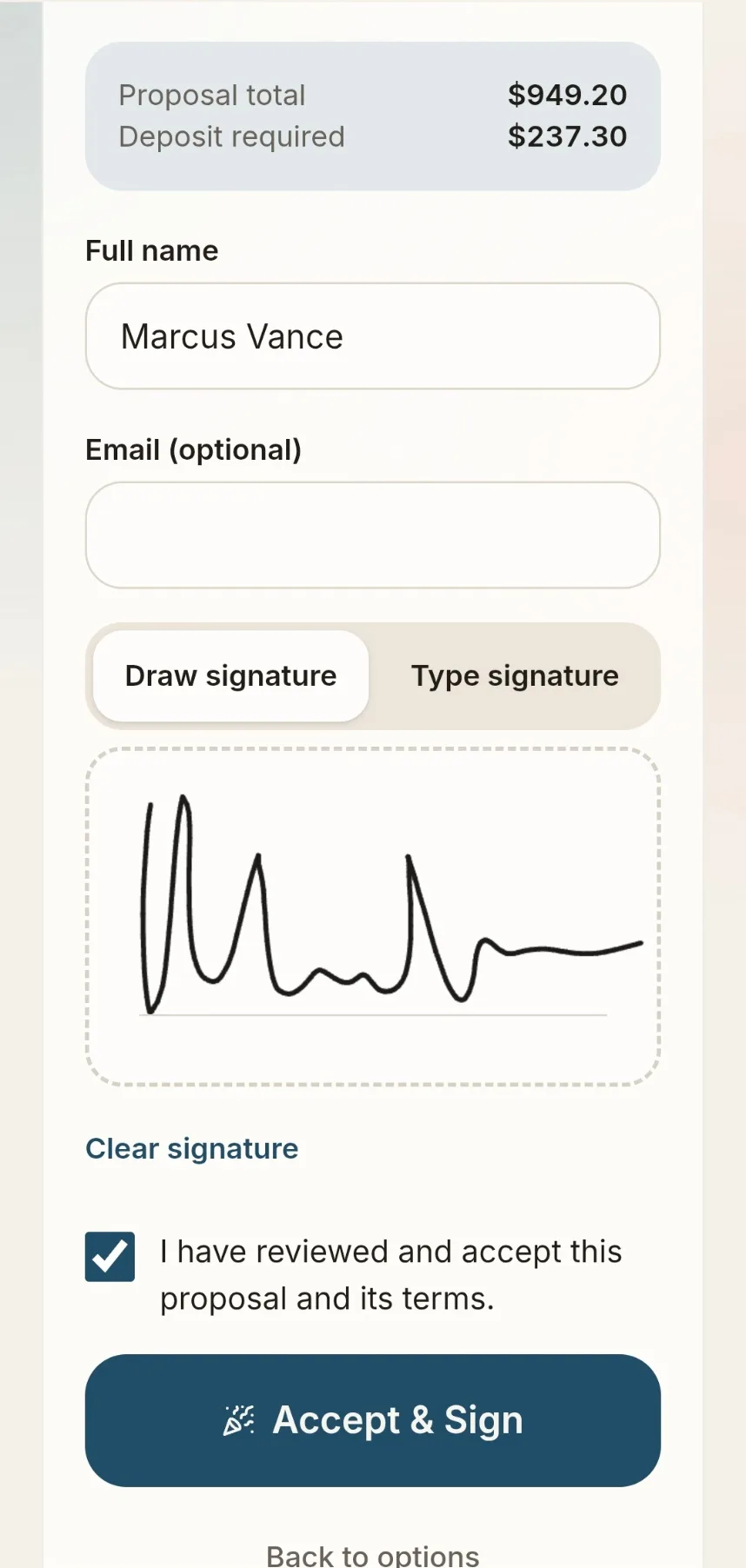
With CoatMetric's painting proposal software, you can turn an estimate into a branded proposal that customers review and sign electronically — branded proposals and e-signatures are included on every plan. Online customer deposits are available on Pro and Team through the contractor's own connected Stripe account; CoatMetric adds no extra fee on deposits, and standard Stripe processing fees apply. Verify the account's enabled features before promising any payment method to a customer.
Before you send
- Does the scope match the actual site visit?
- Are included surfaces, preparation, coatings and coat count explicit?
- Are exclusions, schedule assumptions and changes clear?
- Does the price correspond to the scope and the selected options?
- Are payment instructions, required notices and acceptance methods appropriate?
Run through the painting estimate checklist for the estimate behind the proposal, or start from the painting estimate template.
Frequently asked questions
Should I show itemized pricing?
That's a business choice. Itemizing builds transparency; a single total keeps it simple. Either way, the scope should be clear.
Sources checked
Related pages
Move beyond spreadsheet estimates
CoatMetric helps you measure, price from your own rates, review with QuoteGuard and send signable proposals. Try it free for 14 days with full Pro access — no credit card required.