
Template
Painting Estimate Template for Small Contractors
3 min read · Updated
A useful estimate template should be easy to reuse without making every painting job look identical. Its job is to prompt the contractor for the information a customer needs and the business needs to price responsibly. The Painting Contractors Association recommends checking scope, schedule, labour, materials, price and payment information before a proposal goes out.
The information your template should capture
Begin with customer name, job location, contact details, estimate number and date. Then record the actual scope: surfaces, measurements, preparation, primer, products, coat count, trim and optional work. Price direct labour, materials and job expenses, account for overhead and use your own margin assumptions. Finish with clear exclusions, schedule assumptions, change procedures and payment terms.
A template should encourage a decision on every meaningful item, not force a universal number into every quote. For example, it may ask whether doors and windows were deducted from wall area, but it should not silently make that deduction for you.
Copy-and-adapt estimate worksheet
The fields below can be copied into a document, spreadsheet or estimating tool.
Customer and site
- Estimate reference: [number]
- Customer and contact: [name / contact]
- Property address: [address]
- Date and validity period: [dates]
- Site access / occupied areas: [notes]
| Area | Surface | Measurement or count | Preparation | Product / finish | Coats |
|---|---|---|---|---|---|
| [Room or elevation] | [Walls] | [Area] | [Specific prep] | [Product] | [Count] |
| [Area] | [Ceiling] | [Area] | [Specific prep] | [Product] | [Count] |
| [Area] | [Trim / doors] | [Length / number] | [Specific prep] | [Product] | [Count] |
| Cost category | Basis | Calculated amount |
|---|---|---|
| Labour | Planned hours × burdened cost per hour | [amount] |
| Paint / primer | Actual units × supplier cost | [amount] |
| Consumables | Itemized quantities | [amount] |
| Equipment / access | Quotes or internal cost | [amount] |
| Subcontractors / waste | Verified job cost | [amount] |
| Allocated overhead | Documented costing method | [amount] |
| Total cost basis | Sum | [amount] |
| Selling price | Your chosen pricing method | [amount] |
| Taxes | Applicable local treatment | [amount] |
| Customer total | Final agreed calculation | [amount] |
Scope and agreement
- Included preparation: [specific work]
- Included application and finish: [details]
- Exclusions / work by others: [specific items]
- Change and hidden-condition approval process: [process]
- Estimated schedule / dependencies: [details]
- Payment milestones and methods: [terms]
- Customer acceptance: [method / date]
The labour line uses a burdened cost per hour — see how to calculate labour costs.
Worked pricing example: understand the arithmetic
All amounts are hypothetical cost units rather than actual painting prices.
| Cost category | Amount |
|---|---|
| Labour cost | 600 |
| Materials | 250 |
| Equipment / consumables | 50 |
| Allocated overhead | 150 |
| Included cost basis | 1,050 |
If the contractor chooses a 25% margin after those included costs, then:
Selling price = 1,050 ÷ (1 − 0.25) = 1,400
Difference = 1,400 − 1,050 = 350, which is 25% of 1,400
That does not mean 25% is the right margin for every contractor or that all business expenses have necessarily been included. Verify the cost categories and adjust the method to the company's financial records. Applicable taxes, when relevant, are treated separately. The profit margin guide explains margin versus markup in more detail.
Estimate paint separately from price
Your paint quantity should follow the selected product's published coverage and the specified area and coat count. A practical starting formula is:
Paint quantity = (surface area × coats) ÷ coverage per unit
Adjust for material properties and conditions. Benjamin Moore warns that paint-calculator results are estimates and that usage varies with the application. Do not automatically apply one universal coverage assumption to primer, trim enamel and exterior masonry coating.
Before turning the template into a proposal
Review what a homeowner or building manager would understand from the sheet. Check that the preparation, exclusions, products, schedule and payment language are clear. Verify that a formula change has not accidentally changed the margin or taxes. Give the customer an approved version instead of an internal costing worksheet if it includes confidential labour assumptions.
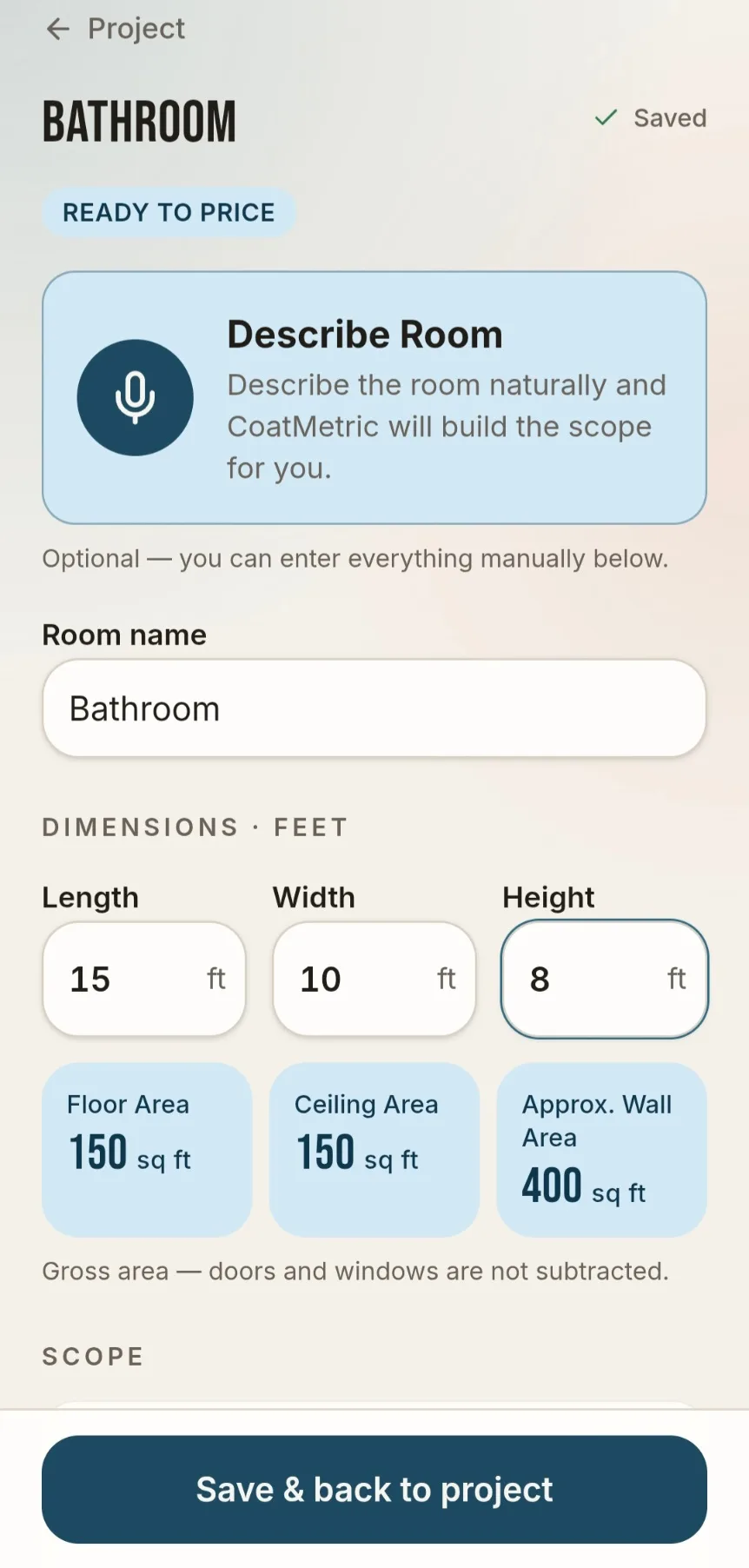
CoatMetric supports custom price books, painting-specific room measurements and branded customer proposals — see the simple painting estimate app. QuoteGuard on Pro and Team (and the 14-day trial) provides an advisory second review of entered estimates. The software uses your chosen costs and prices; it does not establish correct local labour rates for you.
Frequently asked questions
Is this template free to use?
Yes. Copy the structure into your own documents — no signup required.
Sources checked
Related pages
Move beyond spreadsheet estimates
CoatMetric helps you measure, price from your own rates, review with QuoteGuard and send signable proposals. Try it free for 14 days with full Pro access — no credit card required.