Guide
How to Estimate an Exterior Painting Job
4 min read · Updated
Exterior painting estimates need more than a measurement of the house's footprint. Different elevations may have different surfaces, exposure, preparation, heights and access requirements. A reliable quote identifies those differences before work starts and gives the customer a precise scope they can approve.
1. Inspect and document the condition of each elevation
Walk around the property and note the material and condition of siding, trim, fascia, soffits, doors, shutters, railings and other requested elements. Look for loose or peeling coating, staining, mildew, failed caulking, weathered bare wood, rust, cracks and areas that may need specialist repair.
Record anything that could change the job: landscaping close to walls, steep grades, nearby utilities, difficult access, occupant needs and restricted work hours. Photograph conditions with the customer's permission. Do not silently include carpentry, rot remediation, asbestos or other hazardous work that your business has not agreed to perform.
2. Measure the actual paintable scope
Divide the building into front, rear and side elevations, then break each elevation into substrate and finish types. For a rectangular wall face, gross area equals width × height. Measure large openings separately if your estimating method deducts them. Treat detailed trim, window frames, doors, shutters, railings and hard-to-access features as their own line items or measurable units.
Gross wall-face area = width × height
Do not let a convenient square-footage total obscure difficult work. Two equally sized elevations can require very different labour because of peeling paint, numerous details or height.
3. Describe preparation and coating requirements
Specify which washing, rinsing, scraping, sanding, filling, caulking, rust treatment and priming are included. Sherwin-Williams' surface guidance requires sound, clean, dry substrates and notes that surface preparation varies by material. Confirm compatibility and application conditions using the actual selected product's technical data sheet, including moisture, temperature, recoat and drying requirements.
Older coatings can contain lead. In the US, paid renovation work disturbing coatings in certain pre-1978 buildings can be covered by EPA RRP requirements. Assess applicable regulations and controls before scraping, sanding or other disturbance. Other countries have different rules.
If the scope calls for rot repair, structural replacement, extensive remediation or specialty access, say whether it is included, excluded or to be priced after further inspection. Clear exceptions protect both the customer and contractor.
4. Estimate labour, access and equipment
Create separate labour allowances for setup and masking, washing and drying-related return trips, repair/preparation, priming, each coating operation, difficult details, cleanup and inspection. Consider whether staging, lift rental or specialist access arrangements are necessary. Do not assume ladders are appropriate for every job: applicable occupational safety rules govern equipment, inspection and use. For example, OSHA has construction ladder requirements that cover painting and decorating work in its jurisdiction.
Use actual history from similar exteriors rather than a single production rate. Estimate equipment rental, transport, protection materials and any required waste handling separately so those costs are not buried in the coating area calculation. The labour cost guide shows how to turn hours into a job labour cost.
5. Work out materials from specified products
For each separate coating system, use:
Quantity = surface area × coats ÷ product-specific coverage
Adjust for substrate texture, application method, waste and the manufacturer's instructions. Check how much primer or stain blocker is needed; these often have different coverage and application conditions from the finish coat. Add caulk, abrasives, tape, film, cleaning products and other consumables.
The total amount purchased may exceed the strict theoretical calculation. Do not present an arbitrary waste percentage as a universal industry standard.
6. State schedule assumptions, weather and changes
Exterior coating depends on weather and surface conditions. Provide a realistic anticipated timeframe, but avoid promising work will proceed regardless of rain, moisture, wind or temperature. Clarify how weather delays and newly discovered substrate repairs will be communicated and priced.
7. Review the complete job before sending
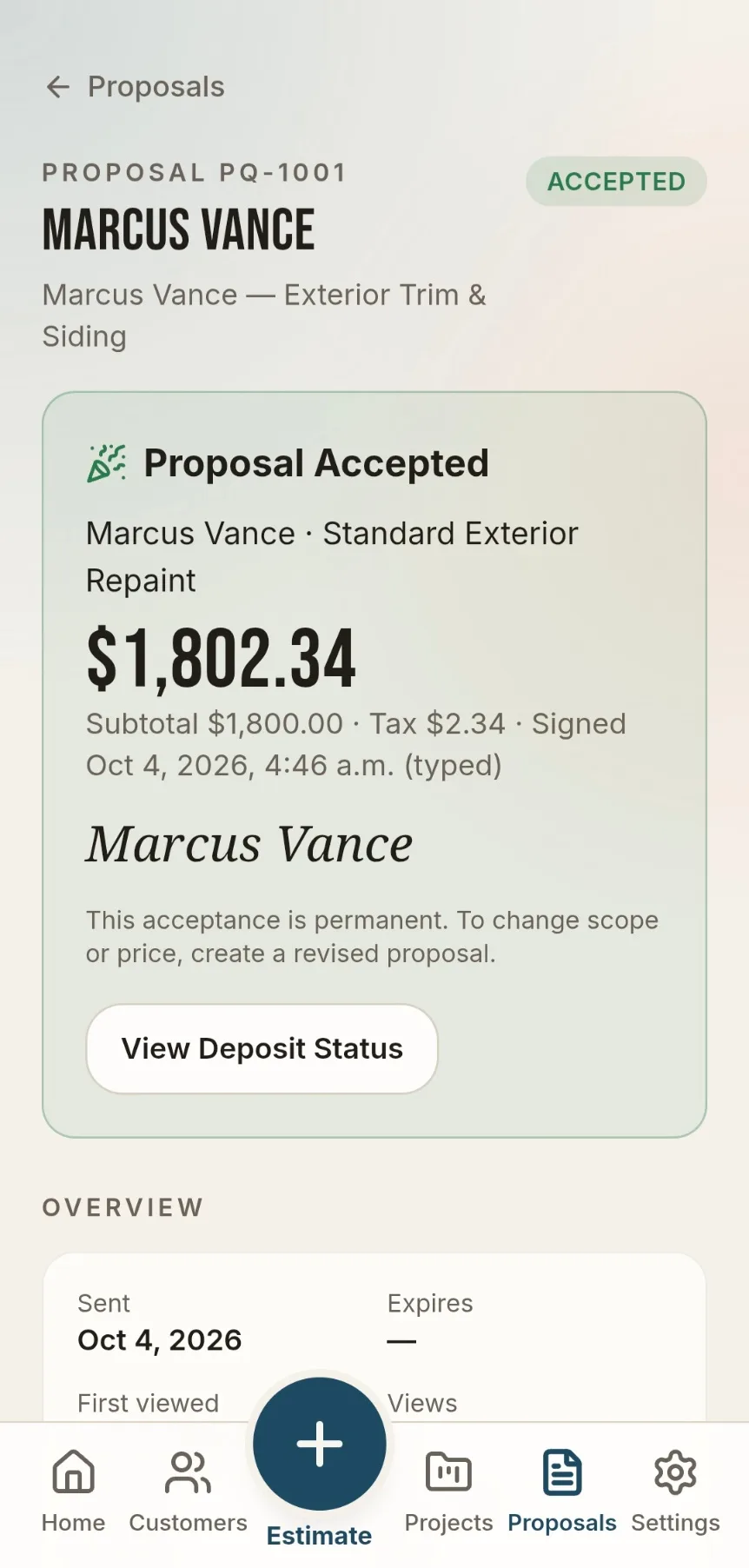
Double-check elevations, access, surface types, primer, coats, preparation, materials, labour and exclusions against your photographs and notes. A clear exterior proposal should show the customer what work will — and will not — be completed for the agreed price. The professional proposal guide covers the structure.
CoatMetric supports custom rate-based estimates and customer proposals — see exterior painting estimates in CoatMetric. QuoteGuard is an advisory review for information entered in CoatMetric, not an exterior inspection, weather forecast or guaranteed scope audit.
Exterior estimate checklist
- Each elevation and its individual surfaces measured
- Existing coating, substrate damage and required preparation noted
- Product and number of coats specified
- Height, access, equipment and safety requirements assessed
- Paint and consumables calculated using product specifications
- Labour, overhead and job-specific expenses included
- Weather assumptions, exclusions and change approvals documented
Frequently asked questions
Should rot repair be in a painting estimate?
Only if you do that work. Otherwise, exclude it clearly and note that it may be required before painting.
How do I handle weather delays?
Explain scheduling assumptions in your proposal terms so customers know what to expect, and follow the product's approved application conditions.
Sources checked
Related pages
Move beyond spreadsheet estimates
CoatMetric helps you measure, price from your own rates, review with QuoteGuard and send signable proposals. Try it free for 14 days with full Pro access — no credit card required.