
Guide
How to Estimate an Interior Painting Job
4 min read · Updated
A dependable interior painting estimate starts with a clear scope, not a price per room guessed on the spot. Measure the surfaces, document their condition, decide which preparation and finishes are included, calculate the resources needed, and then price the work using your own costs. This process works whether you are quoting a single bedroom or an entire house.
1. Walk the job before you calculate
Record the customer and site details, room dimensions, ceiling heights, access restrictions and condition of each surface. Ask which walls, ceilings, doors, trim, closets and cabinetry are included. A request to “paint the bedroom” can mean walls only to one customer and an entire room to another.
Inspect for holes, cracking, stains, peeling paint, dampness, glossy finishes, damaged trim and previous repairs. Note furniture, floor protection, tight access, occupied rooms and any work that needs to happen before painting can begin. If a problem needs specialist evaluation, describe it rather than quietly including an assumed repair.
2. Calculate surfaces separately
For a rectangular room, an initial gross wall-area calculation is:
Wall area = 2 × (length + width) × wall height
Ceiling area = length × width
Some estimators price from gross wall area and handle openings, doors and trim separately. Others deduct large openings. Either method can work if applied consistently and if the estimate clearly identifies separately priced work.
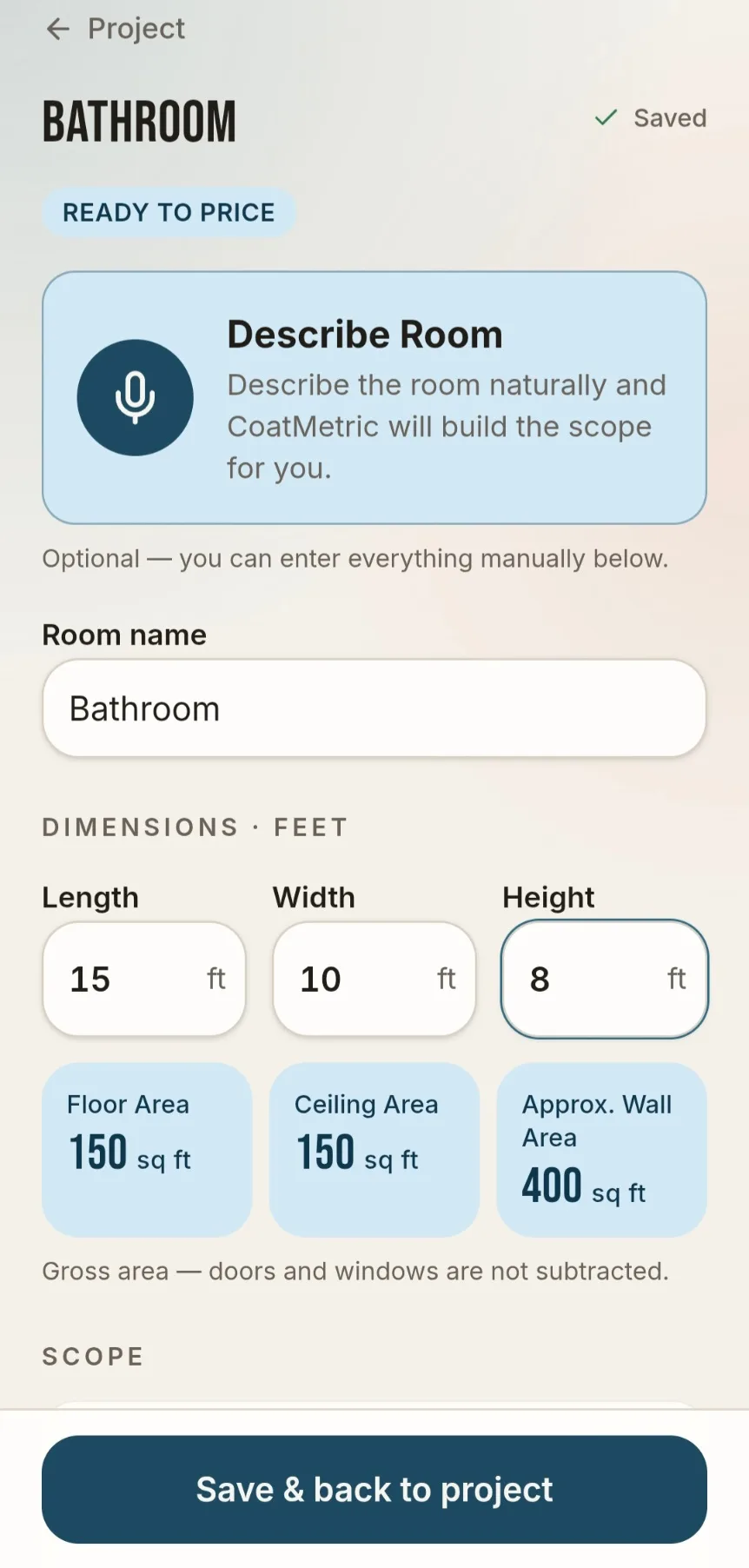
In CoatMetric, room entry calculates approximate wall and ceiling areas. The wall calculation is gross — openings are not automatically deducted — so review and adjust to match your estimating method. See interior painting estimates in CoatMetric.
3. Specify coatings and preparation
Document the proposed paint product or performance specification, colour, sheen, primer needs and the number of coats for each surface. Walls, ceilings, trim and doors may require different systems and labour allowances.
List preparation explicitly: cleaning, protection and masking, patching, sanding, caulking, spot priming and stain blocking where needed. Preparation depends on the substrate and condition. Sherwin-Williams recommends clean, sound, dry surfaces and appropriate treatment of loose coatings, glossy areas and patched areas; Benjamin Moore advises using appropriate primers for stains, difficult adhesion and significant colour changes. Do not assume every existing wall needs the same primer treatment.
For older properties, assess whether lead-safe or other hazardous-material rules apply before disturbing coatings. In the United States, EPA's Renovation, Repair and Painting program may apply to compensated work disturbing paint in pre-1978 housing or child-occupied facilities. Requirements elsewhere differ, so check local rules and training needs.
4. Calculate paint quantity from the product data
A working formula is:
Paint required = (paintable area × number of coats) ÷ manufacturer's stated coverage per unit
That 350 figure is an assumed example, not a claim that all paints cover 350 sq ft per gallon. Manufacturers caution that calculators are estimates and that actual usage varies. Calculate ceilings, trim, doors and primers separately; never count a ceiling in a wall-only estimate.
5. Calculate labour and job costs
Estimate the actual work sequence: site setup; protection; preparation; priming; coating application; movement between rooms; cleanup; inspection and touch-ups. Use production records from similar past work instead of adopting someone else's universal hours-per-square-foot rule.
Multiply planned productive hours by your burdened labour cost, which includes applicable employer costs beyond basic wages — the labour cost guide walks through the full calculation. Add materials, consumables, equipment, travel and job-specific expenses. Include a reasonable, consistently calculated share of business overhead, then set a selling price that meets your own margin goals (see painting contractor profit margins). Keep tax treatment separate and comply with the rules relevant to the job.
6. Write a proposal the customer can compare with the finished job
A good proposal states what will be painted, how many coats are included, what preparation is covered, which products or specifications apply, what is excluded, the expected schedule, the price and the agreed payment terms. Note who moves furniture and who handles disposal and final cleaning. If additional repairs are discovered, describe how changes will be approved before extra work begins.
Before sending, compare the proposal against your measurements and walk-through notes. CoatMetric's painting estimating software lets painters work with their own price book and create branded, signable proposals. QuoteGuard, included on Pro and Team and during the 14-day Pro trial, can flag selected issues in entered estimates for further review. It does not verify every condition or guarantee a correct price.
Final interior estimating check
- Have I accounted for walls, ceilings, doors, trim, closets and other requested surfaces separately?
- Are surface repairs, protection and primer requirements written down?
- Does my paint quantity match the manufacturer's actual product guidance?
- Are setup, cleanup, travel, labour burden and overhead covered?
- Can the customer tell exactly what is included, excluded and chargeable as a change?
For a printable version covering every job type, use the free painting estimate checklist.
Frequently asked questions
Should I deduct doors and windows?
It depends on how you price. Some contractors deduct large openings; others keep gross area and price trim and doors separately. Be consistent, and make separately priced work clear in the estimate.
How many coats should I include?
It depends on the existing surface, colour change and product. Write the number of coats into the scope so the customer knows what's included.
Sources checked
Related pages
Move beyond spreadsheet estimates
CoatMetric helps you measure, price from your own rates, review with QuoteGuard and send signable proposals. Try it free for 14 days with full Pro access — no credit card required.