
Guide
Common Painting Quote Mistakes That Reduce Profit
4 min read · Updated
Painting quotes often go wrong because a required activity was never identified, not because the contractor used the wrong calculator. A repeatable estimating process is designed to capture the work, document assumptions, and review the numbers before promising a price. The Painting Contractors Association's checklist is a useful reminder to validate scope, labour, materials, costs and customer terms.
Mistake 1: pricing only the obvious painted area
Walls are easy to measure; trim, doors, closets, ceilings, edges, railings and awkward details are easier to overlook. During the walk-through, build a list of all requested surfaces, not simply total floor area. Note when a surface is excluded so expectations stay aligned.
Mistake 2: leaving preparation out of the hours
Repairing cracks, filling holes, sanding, masking and cleaning are real work. Surface manufacturers stress that coatings need appropriate preparation on sound, clean and dry substrates. Assign prep time explicitly rather than assuming it is covered by the hours allowed for applying paint.
Mistake 3: relying on one paint coverage figure
Different products and surfaces require different material allowances. Estimate the area and coat count, then check the chosen coating's published technical information. A manufacturer's calculator is a starting estimate, not a guarantee of actual consumption. Add primers and consumables separately.
Mistake 4: forgetting the job before and after painting
Driving to the job, protecting occupied rooms, bringing in equipment, daily setup, disposing of permitted waste, cleanup, punch-list work and customer walkthroughs can all involve time or cost. Include the activities that the job really requires, using your own records rather than a standard percentage copied from another contractor.
Mistake 5: assuming an hourly wage is the whole labour cost
Employees may carry employer-paid payroll costs, benefits and paid time off. Total annual employment cost divided by productive job hours is a more informative cost basis than base wages alone. Keep general overhead separate to prevent double counting. See the labour cost guide for a complete worked example.
Mistake 6: confusing markup with margin
If a job costs 100 hypothetical cost units and you sell it for 125, you have applied a 25% markup, but the margin against that cost basis is 20%. Know which number you're using before approving the estimate or a discount. A margin target is a business decision, not an industry constant — the profit margin guide shows the formulas.
Mistake 7: failing to explain exclusions and hidden conditions
A quote can be mathematically correct yet commercially risky if the client assumes unlisted repairs or extra coats are included. Name the limitations: for example, whether major drywall repair, carpentry, removing wallpaper or replacing damaged wood is included. Explain how hidden damage will be reviewed and approved before additional work is done.
Mistake 8: ignoring access, product limits and weather
Exterior work may require different access equipment and must follow the coating manufacturer's application conditions. Include setup, rental and safe access costs where necessary. Never treat product temperature requirements or occupational safety obligations as optional just because a bid is competitive. The exterior estimating guide covers this in detail.
Mistake 9: treating older coatings as ordinary prep without checking
Disturbing historic painted surfaces can raise health and legal risks. In the United States, EPA's RRP rule may cover paid work disturbing coatings in pre-1978 residences and child-occupied facilities, subject to the rule's details. Check the law for the work location and the actual site before including scraping, sanding or demolition in the plan. This is a safety and compliance issue, not just an estimating line item.
Mistake 10: sending vague proposal terms
Customers should understand scope, schedule assumptions, price, exclusions, changes and payment terms before they accept. Incomplete payment terms and unexplained scope changes can cause disputes. Review the customer-facing document independently from your internal costing worksheet — see how to create a professional painting proposal.
Example: correct a missed scope item before approval
A simple five-step pre-send review
- Walk: Compare listed surfaces with the site notes and photographs.
- Scope: Confirm preparation, primers, coats, inclusions and exclusions.
- Cost: Recheck quantities, labour hours, access and overhead.
- Price: Calculate the margin on the intended cost basis and review any discounts.
- Proposal: Confirm schedule, changes, taxes, payment terms and acceptance.
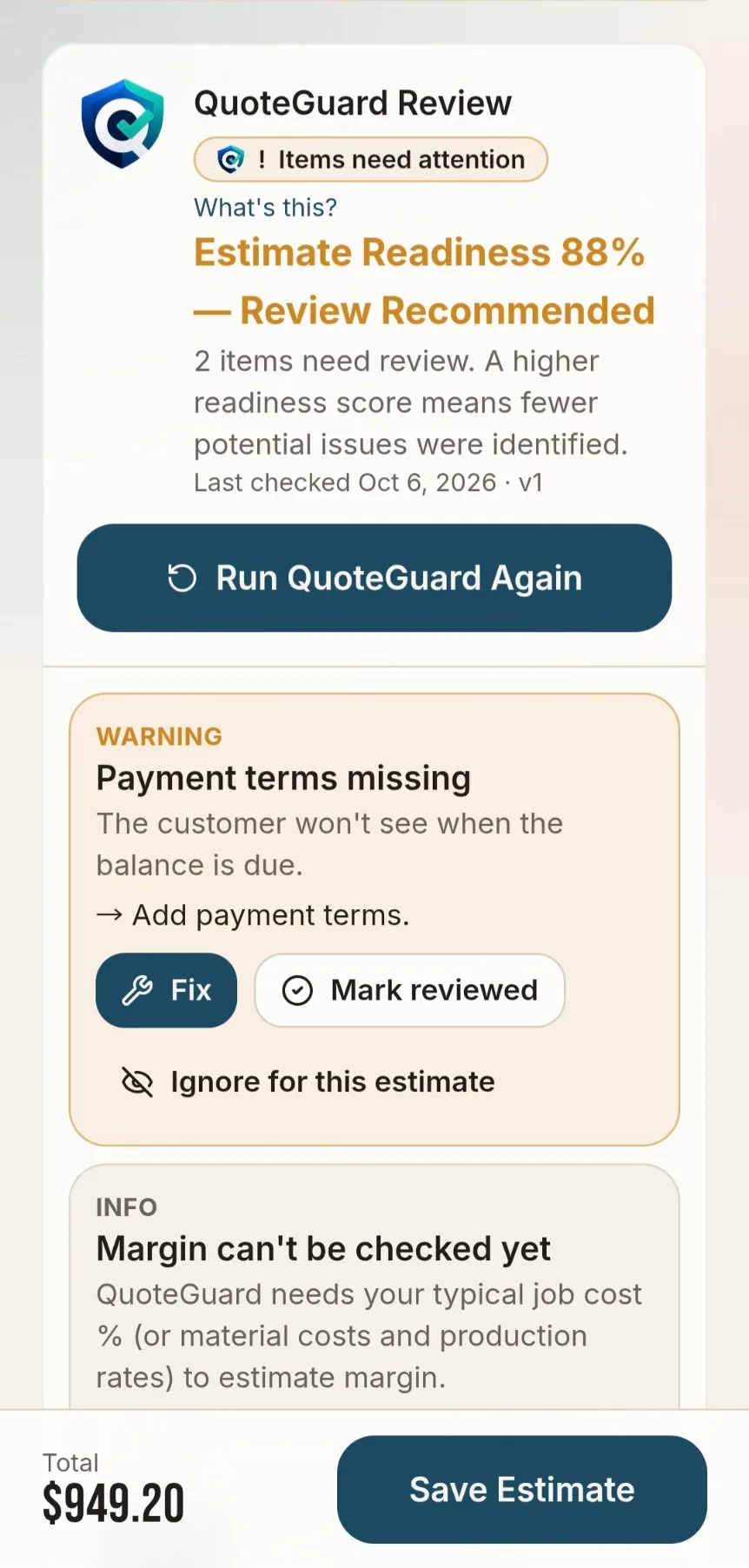
Reviewing the estimate is the contractor's responsibility. QuoteGuard in CoatMetric may flag potential issues within the data entered, including selected scope omissions, missing terms and margin concerns. It is included with Pro and Team and the 14-day Pro trial. It is not a substitute for inspecting the site, checking local requirements, or approving the final quote.
Keep a printable version of these checks with the free painting estimate checklist or the detailed what contractors forget checklist.
Frequently asked questions
Can software prevent every quoting mistake?
No. Software can help you review more consistently, but your knowledge of the job and your own judgement remain essential.
Sources checked
Related pages
Move beyond spreadsheet estimates
CoatMetric helps you measure, price from your own rates, review with QuoteGuard and send signable proposals. Try it free for 14 days with full Pro access — no credit card required.